
Review the technical properties of R32, its A2L safety class, typical applications and the main differences from R410A.
What R32 is
R32 is difluoromethane, a single-component HFC used widely in newer residential and light-commercial split air conditioners and many heat-pump systems. As a pure fluid it has one boiling point at a given pressure, which simplifies charge diagnostics compared with zeotropic blends.
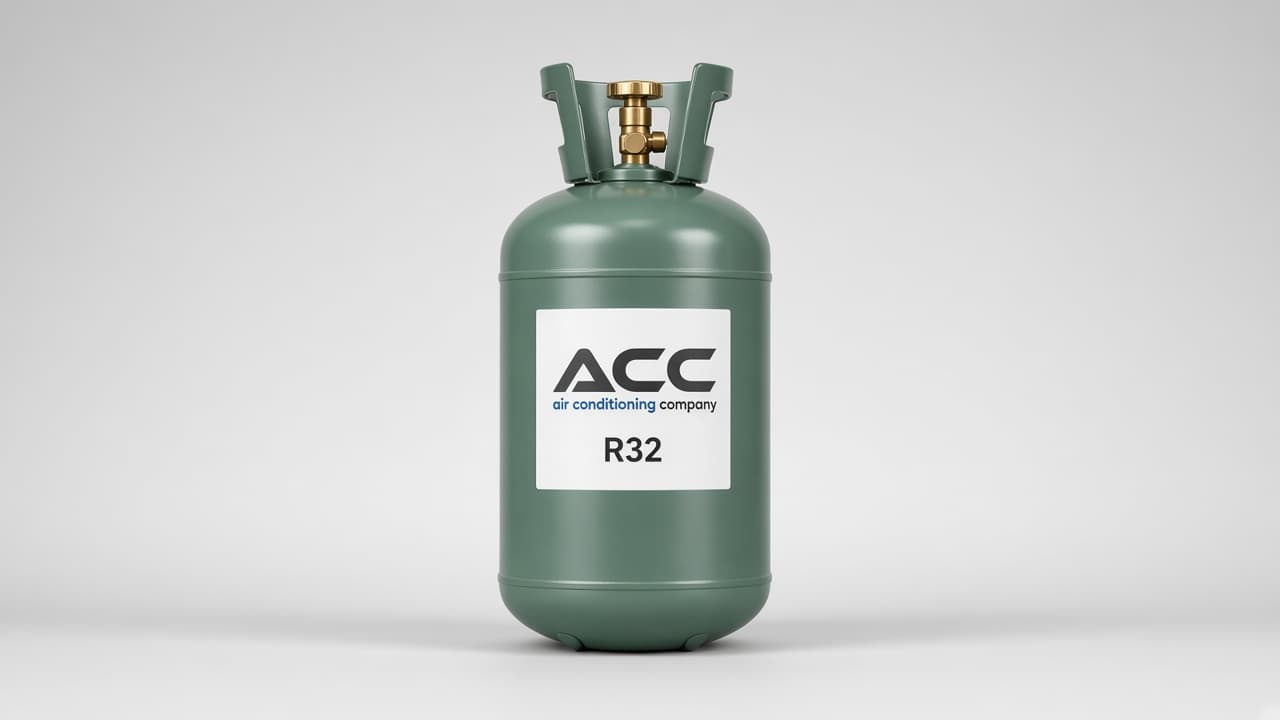
ACC presents R32 with R410A, R134a, R404A and R407C as one of the refrigerants in its product range for professional enquiry. Product pages summarise typical applications, ASHRAE safety class and GWP/ODP figures for procurement and tender work.
Key properties
Under common datasheet conventions (IPCC AR4, 100-year), R32 GWP is about 675 — substantially lower than R410A’s figure near 2088. ODP is zero. Operating pressures are high relative to older R22 systems and broadly in the same high-pressure family as R410A equipment.
Lubricant compatibility in OEM R32 systems is typically POE. Nameplate oil type, filter-drier selection and moisture control remain part of correct service practice by qualified technicians.
A2L safety class
ASHRAE classifies R32 as A2L: lower toxicity with lower flammability. That classification drives charge limits, room volume rules, leak detection expectations and installer competence requirements in many jurisdictions.
Tools, cylinders and recovery equipment must be suitable for A2L refrigerants. Storage and transport follow the SDS and applicable rules. ACC İklimlendirme supplies products and technical documents; on-site design and installation remain with HVAC/R professionals.
R32 versus R410A
R410A is a near-azeotropic blend of R32 and R125, class A1, with GWP near 2088. R32 is a pure fluid, A2L, with much lower GWP. Capacity, discharge temperature and flammability behaviour differ — equipment is designed around one specified fluid.
Do not charge R32 into an R410A system unless the OEM publishes an explicit conversion path with parts, oil and charge procedure. Pressure ratings, expansion devices and safety features may not transfer one-to-one.
Applications and purchasing notes
Typical uses include inverter split AC, multi-splits and heat pumps designed and labelled for R32. Matching the nameplate code is the first procurement filter before cylinder size and quantity.
For tenders, list R32 as its own ASHRAE/ISO code. Request SDS and TDS from ACC’s Documents centre by product code when safety files or property sheets are required.
ACC R32 product
ACC presents R32 for B2B buyers who need cylinder supply aligned with labelled equipment. Pair technical questions with model plate data so the correct fluid and documentation package can be confirmed.
Use Contact with product code, quantity and delivery location. Related catalogue pages cover R410A for installed systems that still require the blend.