
We explain that gas is not normally consumed in a closed refrigeration circuit, and why a drop in charge usually points to a leak or a service issue.
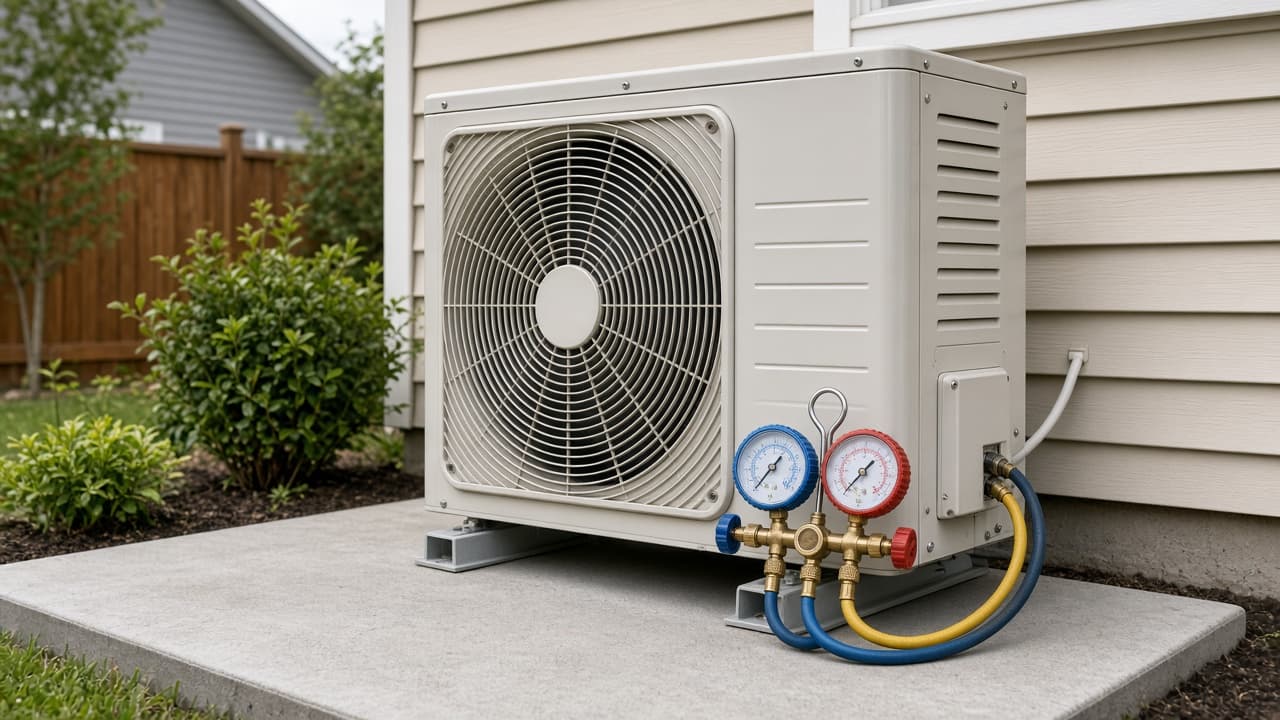
Closed-loop reality
In a sealed vapor-compression system the refrigerant mass is meant to stay inside the circuit for years. It is not a fuel that is consumed like gasoline. If charge falls, the fluid left the circuit — usually through a leak or during incomplete recovery.
Seasonal “top-up” without leak repair describes a failing system, not normal operation. Professional practice finds and fixes leakage paths, then charges to OEM targets.
High-level symptoms
Common owner-visible clues include longer run times, weaker cooling, ice on indoor coils in some conditions, or outdoor unit behaviour that looks strained. These clues are not a diagnosis by themselves.
Electrical faults, dirty filters, failed fans and controls can mimic low-charge symptoms. A qualified technician separates airflow, electrical and refrigerant issues with proper instruments.
What technicians verify
Professionals use gauges, thermometers, weigh-in methods and leak detectors appropriate to the fluid — including A2L procedures for R32. They compare readings to OEM superheat, subcooling or charge-mass instructions.
Blend refrigerants such as R410A and R404A need liquid-phase charging practice from blended cylinders. Pure fluids such as R32 and R134a still require correct mass or PT methods per OEM.
Buying cylinders after diagnosis
Once a technician confirms the nameplate fluid and required quantity, buyers can request the matching ACC product — R32, R410A, R134a, R404A or R407C — with cylinder size and delivery details.
Do not pre-order a substitute fluid hoping it will “work better.” Wrong chemistry damages compressors and voids design assumptions. Match the code first.
ACC and professional service
ACC supplies refrigerants and documentation for B2B buyers. System diagnosis, leak repair and charging remain the responsibility of qualified HVAC/R professionals with suitable tools and licensing where required.
Use Contact with the confirmed product code and quantity after site assessment. Attach nameplate photos when multiple equipment generations share one facility.