
See what A1, A2L and A3 mean in the ASHRAE safety classification and how they affect product selection and on-site safety.
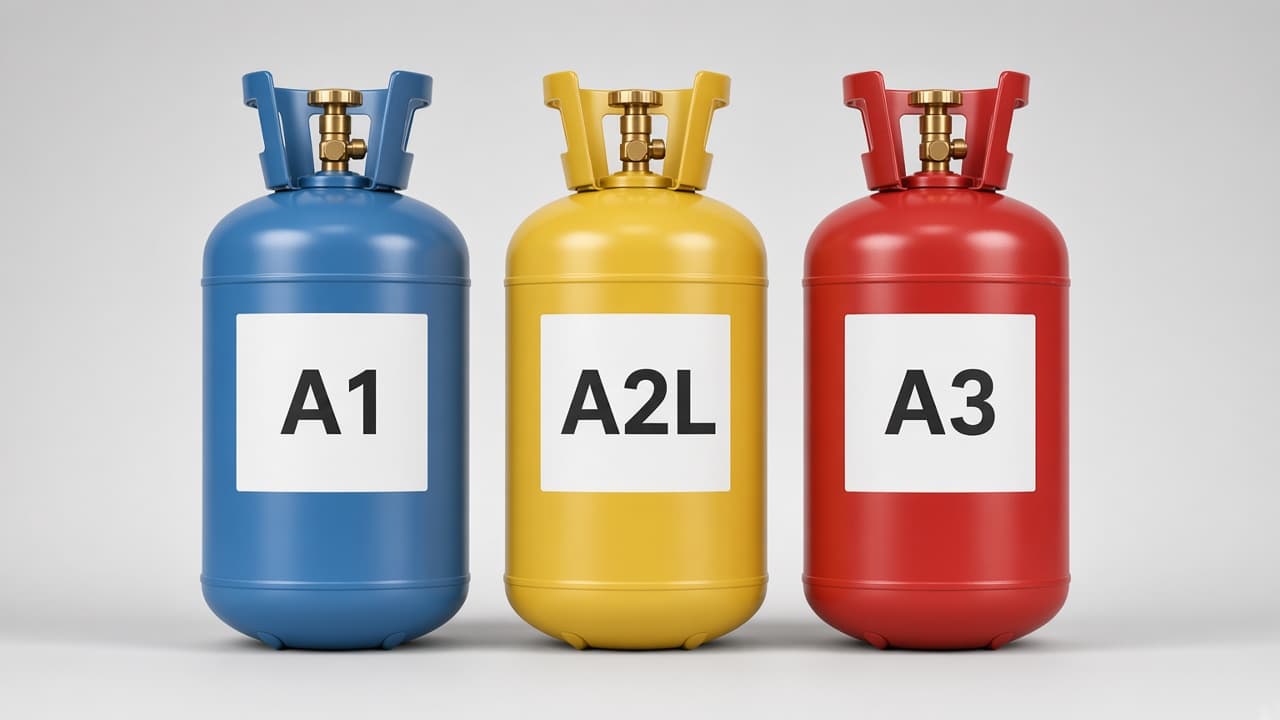
How the class is built
ASHRAE Standard 34 style classes combine toxicity (A = lower, B = higher) with flammability (1 = no flame propagation under standard tests, 2L = lower flammability, 2 = flammable, 3 = higher flammability). Labels A1, A2L and A3 come from that matrix.
Class is a property of the fluid, not a marketing badge. It drives building codes, equipment standards, tooling and training requirements around charging and storage.
A1 in practice
A1 refrigerants show no flame propagation in the standard test and lower toxicity. Among ACC products, R410A and R134a are typically discussed as A1. Handling still requires pressure awareness, recovery practice and SDS guidance.
A1 does not mean zero hazard. Cylinders are pressure vessels; oxygen displacement in confined spaces and thermal decomposition products in fire remain relevant SDS topics.
A2L focus — R32
R32 is the primary A2L fluid in ACC’s current product range. Lower flammability means ignition is possible under defined conditions, so charge limits, ventilation, leak detection and competent installation apply.
Buyers stocking both A1 R410A and A2L R32 should segregate cylinders, labels and recovery paths so technicians never cross-charge by mistake.
A3 hydrocarbons — awareness
A3 fluids such as R290 (propane) and R600a (isobutane) offer very low GWP but higher flammability and strict charge/install limits. They appear in some OEM appliances and specialised systems.
The current product range on this site focuses on five HFC refrigerants: R32, R410A, R134a, R404A and R407C. Projects specifying other codes can enquire via Contact for documentation paths.
Implications for sites
Storage rooms, machine rooms and transport plans should reflect the highest relevant hazard class on site. Keep SDS accessible and cylinders secured upright with valves protected.
Training and local licensing for flammable refrigerants are part of professional practice. ACC supplies fluids and files; field execution stays with qualified HVAC/R teams.